
What Are Data Collection Instruments and Why Do Researchers Use Them?

Quick Overview

Are you confused about how researchers gather accurate information for dissertations and research studies? Many doctoral students hear terms like data collection instruments but do not fully understand what they mean. In simple words, these are tools researchers use to collect information during a study. They help organize answers, observations, opinions, and research findings in a structured way. Without proper data collection methods, research can become confusing and unreliable. As a dissertation statistics expert, I guide students through this process step by step so they can complete their doctoral work with less stress, lower costs, and more confidence.

Understanding Data Collection Instruments

Many students feel overwhelmed when they first begin research.

They hear academic terms that sound complicated.

But the idea is actually simple.

These instruments are tools researchers use to gather information for a study.

These instruments help researchers collect answers, opinions, behaviors, or measurable results in an organized way.

Researchers use them because they make studies more accurate and easier to analyze.

Some common examples include:

  • Surveys
  • Interviews
  • Observation checklists
  • Questionnaires
  • Focus groups

Every research study needs a clear method for gathering information.

Without that structure, the results may not be trustworthy.

Why Researchers Need Organized Data

Good research depends on good data.

Researchers cannot make strong conclusions if the information is incomplete or confusing.

That is why organization matters so much.

Imagine asking 100 people different questions with no structure.

The results would become messy very quickly.

Proper research tools help researchers collect the same type of information from every participant.

This improves consistency.

Reliable data collection methods help improve research validity and reduce bias during studies.

That is especially important for doctoral students writing dissertations.

Common Tools Used in Research Studies

Different studies use different tools.

The best choice depends on the research question.

Some researchers use surveys to gather opinions from large groups.

Others use interviews to collect deeper personal responses.

Here are some common instruments for collecting data researchers often use:

Research Tool               Main Purpose

Surveys                          Gather large amounts of responses

Interviews                       Explore personal experiences

Questionnaires                Collect structured answers

Observations                   Study behaviors or actions

Focus Groups                  Gather group opinions

Each tool serves a different purpose.

The key is choosing the one that fits the study correctly.

Choosing the Right Instrument Matters

This is where many doctoral students struggle.

They often choose tools that do not match their research goals.

That can create major problems later during analysis.

For example, a student studying emotional experiences may need interviews instead of simple surveys.

A study involving large populations may work better with questionnaires.

The research design should guide the choice.

As a dissertation coach, I help students choose methods that align properly with their research questions.

This saves time, money, and frustration later.

Surveys and Questionnaires Explained

Surveys are one of the most common research tools.

They help researchers collect information from many participants quickly.

Questionnaires usually contain structured questions with fixed responses.

This makes data easier to measure and analyze statistically.

Students often use online survey tools because they are affordable and easy to distribute.

However, poorly written survey questions can create weak research results.

That is why question design matters.

Clear questions usually produce stronger and more accurate responses.

Interviews and Observations in Research

Not all research works well with surveys.

Some studies require personal interaction.

Interviews allow researchers to ask deeper questions and explore experiences in detail.

Observations work differently.

Researchers watch behaviors or situations directly instead of asking questions.

These methods often provide richer information.

But they also require careful planning and organization.

Many students underestimate how much preparation interviews and observations require.

That is where guidance becomes valuable.

How Reliable Instruments Improve Results

Reliable research tools help create trustworthy studies.

If the instrument produces inconsistent results, the entire study becomes weaker.

Researchers often test reliability before collecting full data.

This process helps confirm the instrument measures information correctly.

For doctoral students, reliability and validity are critical parts of dissertation approval.

Many universities expect strong evidence that research tools work properly.

This step often feels stressful for students.

I work closely with doctoral students to simplify these concepts and make the process easier to understand.

Problems Students Face During Data Collection

Many doctoral students struggle during the research stage.

Some feel confused about statistics.

Others choose the wrong methodology or collect weak data.

These mistakes can delay graduation and increase stress.

I have seen students spend thousands of dollars on large consulting companies that provide very little personal support.

That is why I work differently.

My students work directly with me throughout the process.

They receive one on one support, practical guidance, and honest feedback.

This personal approach helps students complete their degrees sooner and with less emotional pressure.

Why Dissertation Support Makes a Difference

Research can feel lonely and overwhelming.

Many students lose confidence halfway through the dissertation process.

That is completely normal.

Good support can make a major difference.

I help doctoral students understand statistics, research design, and data collection in plain English.

My goal is to simplify the process so students feel more confident and less stressed.

My book, Simplifying Statistics for Graduate Students, was created for this exact reason.

Doctoral students deserve clear guidance without huge debt or unnecessary confusion.

Closing Thoughts

Data collection tools play a huge role in research success.

They help researchers gather organized, reliable, and meaningful information that supports strong conclusions.

But choosing the right tools can feel difficult without proper guidance.

As a dissertation statistics expert and doctoral coach, I help students understand research methods in a simple and practical way.

If you want support that feels personal, honest, and focused on your success, consider working with me for your doctoral journey.

FAQs

1. What are data collection instruments in research?

Data collection tools are used by researchers to gather information during studies. Common examples include surveys, interviews, questionnaires, and observations.

2. Why are data collection tools important?

These tools help researchers collect organized and reliable information. Strong data collection methods improve research accuracy and support better conclusions.

3. What is the difference between surveys and interviews?

Surveys collect structured responses from large groups, while interviews allow researchers to explore personal experiences in greater detail.

4. How do researchers choose the right research instrument?

Researchers choose tools based on the research question, study design, target population, and type of information they need to collect.

5. Why do doctoral students struggle with data collection?

Many students feel overwhelmed by research design, statistics, and methodology decisions. Lack of guidance can make the process more stressful and confusing.

6. How can dissertation coaching help doctoral students?

A dissertation coach provides guidance, feedback, and support throughout the research process. This often helps students complete their degrees faster and with less stress.

Author Bio

This blog is prepared by the team of Dr. Susan Carroll. The objective is to help doctoral students better understand dissertation statistics, research methods, and data collection while reducing stress and confusion during the doctoral journey.

Business Details

Dr. Susan Carroll
Website: https://www.dissertation-statistics.com

Services:
Dr. Susan Carroll provides personal dissertation coaching, research support, and statistics guidance for doctoral students. Students work directly with her for one on one support focused on completing doctoral degrees with less stress and lower costs.


From Raw Data to Results: Understanding My Quantitative Data Analysis Services

If you are wondering how researchers turn hundreds of survey responses or research observations into meaningful findings, the answer is Quantitative Data Analysis Services. I as a provider of these services organize, clean, analyze, and interpret numerical data so that it answers your research questions with confidence. I help graduate and doctoral students understand every step of this process instead of simply providing statistical output. My goal is to make statistics easier to understand while helping you complete a high quality dissertation with less stress, lower costs, and greater confidence in your research results.

Table of Contents

  1. What Is Quantitative Data Analysis?
  2. Why Does Data Analysis Matter in a Dissertation?
  3. How Do I Turn Raw Data into Meaningful Results?
  4. What Does My Data Analysis Process Include?
  5. Why Work with One Dissertation Coach?
  6. Common Mistakes Students Make
  7. Closing Thoughts
  8. FAQs

What Is Quantitative Data Analysis?

Quantitative data analysis is the process of examining numerical information to answer research questions and test hypotheses. Researchers collect data through surveys, questionnaires, assessments, experiments, or existing databases. After collecting the data, it must be carefully prepared before any statistical tests are performed.

Good analysis does much more than produce numbers. It explains what those numbers mean in relation to your study. This is why choosing the correct statistical methods is essential.

According to the American Statistical Association, selecting appropriate statistical methods and interpreting results correctly improves the quality, reliability, and reproducibility of research findings.

As an expert in dissertation statistics and research methods, I guide students through every stage of this journey. I believe you should understand your own research instead of simply receiving your data reports.

Why Does Data Analysis Matter in a Dissertation?

Your dissertation is built around evidence. Your conclusions must be supported by reliable data.

Poor statistical analysis can lead to incorrect conclusions, delayed graduation, and requests for major revisions from committee members.

I have worked with doctoral students from many academic disciplines. My focus is always on helping students choose methods that match their research questions rather than selecting complicated tests that add unnecessary confusion.

I understand that statistics can feel overwhelming. My goal has always been to explain complex concepts in language that students can easily understand.

How Do I Turn Raw Data into Meaningful Results?

The journey from raw data to final conclusions follows several important steps.

First, I review your research questions and hypotheses.

Next, I examine your dataset for missing values, duplicate responses, and data entry errors.

After cleaning the data, I determine which statistical tests best answer your research questions.

Finally, I help interpret the results so they are clearly explained within your dissertation.

This approach allows students to understand not only what the results show but also why they matter.

What Does My Data Analysis Process Include?

Every dissertation is unique, so every analysis should be customized.

Step Purpose Benefit to Student
Review research design Ensure methods fit research questions Stronger methodology
Data cleaning Remove errors and missing values More accurate analysis
Descriptive statistics Summarize participant information Clear understanding of data
Inferential statistics Test hypotheses Reliable conclusions
Results interpretation Explain statistical findings Easier dissertation writing
Final reporting Present results professionally Committee ready presentation

Many students worry that statistics are too difficult to understand. I believe the opposite is true when they are explained properly.

I work directly with every student so they understand the reasoning behind each statistical decision.

Why Choose One Dissertation Coach Instead of a Large Consulting Company?

One of the biggest differences between my services and many online consulting companies is that you work directly with me.

You will have one dissertation coach throughout your research journey.

Many large companies assign students to different consultants during different stages of the dissertation process. This often creates confusion because each consultant may have a different approach.

I believe consistency matters.

When I understand your research from the beginning, I can provide guidance that stays aligned with your goals from proposal through final defense.

My doctoral students have completed their degrees sooner, with less stress, and without accumulating unnecessary expenses because they receive personalized support throughout the process.

I never want students to finish their doctoral journey emotionally exhausted or carrying unnecessary debt because they lacked clear guidance.

What Types of Statistical Methods Can I Help With?

Depending on your research design, I help students understand methods such as correlation analysis, regression analysis, t tests, ANOVA, chi square analysis, factor analysis, reliability testing, and many other quantitative techniques.

I also provide Statistical Consulting for Dissertation projects that require selecting the most appropriate statistical procedures for committee approval.

Every recommendation is based on your research questions instead of applying the same solution to every dissertation.

What Are Common Mistakes Students Make?

Many students begin statistical analysis before confirming that their data is suitable for testing.

Others choose statistical tests because they seem popular instead of selecting methods that answer their research questions.

Another common mistake is focusing only on software output while ignoring interpretation.

Statistics should always tell a story that answers your research objectives.

That is why I explain each result in simple language that connects directly to your dissertation.

Why Is Personalized Guidance So Valuable?

Research shows that doctoral students often experience delays because they become overwhelmed during their dissertation.

Having one experienced mentor can reduce confusion, improve confidence, and help students continue making progress.

As an expert in dissertation statistics and research methods, I believe students deserve clear explanations instead of complicated statistical language.

My goal is not only to help you complete your dissertation but also to help you understand the research process so you feel confident during your dissertation defense and future academic work.

Closing Thoughts

Turning raw data into meaningful research findings does not have to be overwhelming. With the right guidance, statistical analysis becomes a logical and manageable process that strengthens your dissertation and your confidence as a researcher.

If you are looking for personalized support instead of an impersonal consulting company, consider consulting me Dr. Susan Carroll for your doctoral studies. Working directly with one experienced dissertation coach like me can help you move toward graduation with greater clarity, less stress, and a stronger understanding of your research.

Frequently Asked Questions

  1. What are Quantitative Data Analysis Services?

My Quantitative Data Analysis Services help researchers organize, clean, analyze, and interpret numerical data collected during research studies. It ensures that statistical methods match the research questions and that findings are presented accurately, making dissertation results more reliable and academically sound.

  1. Why is statistical analysis important in a dissertation?

Statistical analysis provides evidence that supports your research conclusions. Without proper analysis, your findings may be questioned by your dissertation committee. Accurate statistical methods improve the credibility, validity, and overall quality of your doctoral research while reducing the likelihood of major revisions.

  1. Can I complete statistical analysis without professional help?

Some students successfully complete their own analysis, especially with prior statistical training. However, many doctoral students benefit from expert guidance because selecting appropriate statistical tests and interpreting results correctly can be challenging, particularly for complex quantitative research designs.

  1. What statistical software do you work with?

I help students understand analyses performed using widely accepted statistical software. The focus is always on selecting the right method rather than simply using a particular software package.

  1. How does personalized dissertation coaching help?

Personalized coaching allows one experienced mentor like me to understand your research from beginning to end. This creates consistency throughout your dissertation, reduces confusion, saves time, and helps you gain confidence while completing each chapter and preparing for your dissertation defense.

  1. Who can benefit from these services?

Graduate students, doctoral candidates, university researchers, and academic professionals conducting quantitative research can all benefit. Whether you are designing your study, analyzing data, or interpreting results, expert guidance can make the research process smoother and more successful.

Author Bio

This blog has been prepared by the content team for Dissertation Statistics by Dr. Susan Carroll. The objective is to educate graduate and doctoral students about dissertation statistics, quantitative research methods, and best practices for completing high quality dissertations with confidence while making complex statistical concepts easier to understand.

Business Details

Dissertation Statistics by Dr. Susan Carroll

Dr. Susan Carroll is an expert in dissertation statistics and research methods who provides personalized, one on one dissertation coaching for graduate and doctoral students. She is the author of Simplifying Statistics for Graduate Students and works directly with every student to provide individualized guidance throughout the dissertation process. Her mission is to help students complete their degrees sooner, with less stress and without unnecessary financial burden. For more information, visit https://www.dissertation-statistics.com/.

How DNP Students Can Finish Their Scholarly Projects Faster With the Right Statistics Support

Table of Contents

  1. Why do DNP students struggle with scholarly projects?
  2. How can DNP Scholarly Project Support help?
  3. What kind of statistics help do DNP students need?
  4. How can research methods support improve a DNP project?
  5. When should a DNP student seek help?
  6. How can one-on-one coaching make a difference?
  7. Frequently Asked Questions

Why Do DNP Students Struggle With Scholarly Projects?

DNP Scholarly Project Support can help students move forward when statistics, research methods, and data analysis begin to slow their progress. As a statistician and research methods expert, I help DNP students understand their project data, choose suitable methods, and explain their results clearly. My goal is not to take over a student’s work. My goal is to make the difficult parts easier to understand so the student can make informed decisions and keep moving toward graduation.

The DNP path is demanding. Many students are also working nurses, advanced practice providers, leaders, parents, or caregivers.

You may understand nursing practice very well.

You may understand your clinical problem.

You may even have a strong project idea.

Then the statistics and methodology sections begin.

This is where many DNP students feel stuck.

How Can Statistics Support Help DNP Students Move Forward?

DNP projects often involve real practice problems.

A student may want to study:

  • A patient education program
  • A quality improvement project
  • A clinical practice change
  • A patient safety intervention
  • A screening program
  • A healthcare process improvement

The project may collect data before and after an intervention.

It may compare two groups.

It may measure changes in knowledge, behavior, outcomes, or satisfaction.

The statistical method must match the research question and the type of data collected.

This is where DNP capstone statistics help can make a meaningful difference.

I help students understand why a particular analysis may be appropriate. I also explain what the results mean in plain language.

You should not have to memorize complex statistical formulas to complete a practice focused doctoral project.

You do need to understand your own study.

That is an important difference.

What Does DNP Project Data Analysis Help Include?

Many students know how they want to collect data but do not know what to do with the data afterward.

For example, imagine a DNP student introduces a new patient education program.

The student measures patient knowledge before and after the program.

The next questions may include:

What type of data was collected?

How should the data be summarized?

What test should be used?

Is the change statistically significant?

How should the results be reported?

These questions can feel overwhelming.

With DNP project data analysis help, I assist students work through the process step by step.

The goal is to connect the project question to the data and then connect the data to the correct analysis.

Why Is DNP Project Methodology Help Important?

A strong project begins with a clear plan.

The methodology explains how the project will be completed.

It may include:

  • The project design
  • The setting
  • The participants
  • The intervention
  • The measurement tools
  • The data collection process
  • The analysis plan

A problem in one section can affect the rest of the project.

For example, a research question may ask about change over time, but the data collection plan may not actually measure change properly.

A student may also choose a statistical test that does not match the type of data collected.

DNP project methodology help can help identify these issues early.

I work with students to understand the connection between the project question, the design, the data, and the analysis.

Why Do DNP Students Need Statistics Help?

Statistics can feel difficult because students often see it as a separate subject.

It is not separate from the project.

Statistics helps answer the project question.

For example, a student may ask:

Did patient knowledge improve after the education program?

Did the intervention reduce the number of errors?

Did staff compliance increase?

Did patient satisfaction change?

The statistical analysis helps examine these questions.

DNP project statistics help can give students a clearer understanding of how their data can answer their project question.

I explain statistics in simple terms.

My book, Simplifying Statistics for Graduate Students, reflects the same goal. I want graduate students to understand statistics without feeling that they need to become professional statisticians.

What Kind of Data Analysis Support Can DNP Students Receive?

Students often need support at different stages of a project.

Some need help before collecting data.

Others already have their data and do not know how to begin the analysis.

Data Analysis Help for DNP Project work may include reviewing the project question, understanding the variables, selecting appropriate procedures, interpreting results, and explaining findings.

I also help students understand statistical output.

A software table can contain many numbers.

The important question is not simply, “What number do I report?”

The better question is, “What does this result mean for my DNP project?”

That is the kind of understanding I want students to develop.

How Can One-on-One Support Help?

Many online consulting services use large teams.

You may speak with one person today and another person next week.

That can make a complicated project even more confusing.

My approach is different.

When you work with me, you have one dissertation coach.

I personally provide the statistical and research methods guidance.

This gives us the opportunity to build an understanding of your project over time.

You do not need to explain the same project from the beginning to me every time you have a question.

Data Analysis Support for DNP Project work can be more useful when the support is connected to the student’s specific project.

When Should a DNP Student Ask for Help?

Many students wait too long.

They may spend weeks trying to solve a statistics problem alone.

They may also move forward with a method they do not fully understand.

It is often better to ask questions early.

You may benefit from support when:

  • You are choosing a project design
  • You are unsure which statistical test to use
  • You have collected data and do not know what to do next
  • You are confused by SPSS output
  • You need help interpreting results
  • You are unsure how to write the results section

Early support can help prevent problems later.

Can SPSS Help DNP Students Analyze Their Data?

Yes, SPSS is commonly used for many types of statistical analysis.

However, learning where to click is only one part of the process.

You also need to know why you are choosing a particular analysis.

SPSS Data Analysis Help for DNP students can include assistance in understanding the connection between the research question, variables, data, and statistical procedure.

I do not want students to blindly follow software output.

I want them to understand what the output is saying.

That understanding is important when writing the results and discussing the project with faculty.

Why Is DNP Statistics Support Especially Important Today?

DNP education continues to grow.

According to the American Association of Colleges of Nursing, 44,976 students were enrolled in DNP programs in 2025. AACN also reported that DNP enrollment increased by 5.9% from 2024 to 2025. DNP programs are offered at 452 schools of nursing across the United States.

More nurses are pursuing practice focused doctoral education.

That means more students are working on scholarly projects that require clear research methods and data analysis.

Statistical Support for DNP Student work can help students understand the technical side of a project while staying focused on the clinical or practice problem they want to improve.

How Can I Help You Move Toward Graduation?

I have worked with graduate students for many years.

I understand that students often feel pressure from several directions at once.

You may have a full time job.

You may have family responsibilities.

You may have financial concerns.

You may also feel pressure to finish your degree.

My goal is to help you understand the work so you can move forward with greater confidence.

Statistics help for DNP students should not mean making the student feel more confused.

It should make the project easier to understand.

I help break complicated ideas into smaller steps.

That can make the process feel more manageable.

Why Choose Dr. Susan Carroll for DNP Project Support?

I am Dr. Susan Carroll.

I am an expert in dissertation statistics and research methods.

I have helped doctoral students understand difficult statistical and research concepts.

My approach is personal.

You work directly with me.

I have helped doctoral students complete their degrees faster, with less stress and fewer financial pressures.

I also wrote Simplifying Statistics for Graduate Students to help students understand statistics in a clearer and more approachable way.

I believe students should receive expert support without ending up with a huge debt and no completed doctorate.

Closing Thoughts

A DNP scholarly project can feel overwhelming when the statistics and research methods become confusing.

The right support can help you understand your methodology, organize your data, choose suitable analyses, and explain your findings.

If you are struggling with your DNP project, consider contacting me for personalized support with your DNP degree. I can help you understand the statistics and research methods connected to your own project so you can move forward with greater clarity and less stress.

Frequently Asked Questions

What is DNP scholarly project support?

DNP scholarly project support helps students understand project design, research methods, statistics, data analysis, and interpretation. The goal is to provide guidance so students can better understand their own work and make informed decisions while completing their doctoral nursing practice project.

Can you help me choose the right statistical test?

Yes. I can help you connect your research question, variables, and data type to an appropriate statistical method. I also explain why a method may fit your project so you can understand your analysis instead of simply reporting software output.

Do you provide SPSS support for DNP projects?

Yes. I can help DNP students understand SPSS output and connect the results to their project questions. The goal is to help you understand what the numbers mean and how to explain your findings clearly in your scholarly project.

Can you help with DNP project methodology?

Yes. I can help you understand how your research question, project design, participants, measures, data collection, and analysis fit together. Clear methodology can help you avoid confusion and create a stronger plan for completing your DNP scholarly project.

When should I seek statistics help?

It is usually better to seek help before a problem becomes difficult to correct. Students may benefit from support when choosing a design, planning analysis, working with data, interpreting SPSS results, or writing the results section of a DNP project.

Will you complete my DNP project for me?

No. My goal is to coach and guide you so you understand your own project. I provide personalized expertise in statistics and research methods. You will work directly with me.

Author Bio

This blog was prepared by the team at Dissertation Statistics by Dr. Susan Carroll. The objective is to help DNP students understand how personalized statistics and research methods support may help them move through their scholarly projects with greater clarity and less stress.

Business Details

Dr. Susan Carroll is an expert in dissertation statistics and research methods. She is the author of Simplifying Statistics for Graduate Students and provides one on one coaching for doctoral students working on statistics, research design, methodology, and data analysis.

Website: Dissertation Statistics by Dr. Susan Carroll

Is Hiring a Dissertation Coach Worth It?

Many doctoral students ask me if hiring a Dissertation Coach like me is really worth the cost. My answer is yes. A dissertation is a big project. It takes time, planning, and the right research skills. Most students do not struggle because they are not smart. They struggle because they have never completed a project like this before. With the right guidance from me, you can avoid common mistakes, stay on track, and finish your degree with more confidence. Good coaching saves time and helps you make better research decisions from the very beginning.

Table of Contents

  1. Why do students need a dissertation coach?
  2. What makes personal coaching different?
  3. Can coaching save time and money?
  4. What kind of help do I provide?
  5. Why does statistical support matter?
  6. Is coaching right for every student?
  7. Closing thoughts
  8. Frequently asked questions

Why do students need a dissertation coach?

A dissertation is not just another assignment.

You must choose a research topic. You must build a strong research design. You need to collect data. Then you must analyze that data correctly and explain what it means.

That is a lot to manage.

Many students become stuck somewhere along the way. Some are unsure about their methodology. Others have trouble with statistics. Some lose confidence after receiving committee feedback.

This is where coaching makes a difference.

Instead of trying to solve every problem alone, you have an experienced guide to help you move forward.

What makes personal coaching different?

Not every coaching service works the same way.

Many online companies have large teams. One person answers your emails. Another reviews your proposal. Someone else handles your statistics.

That can be confusing.

At Dissertation Statistics, students work directly with me from start to finish.

There is one coach and that is me.

I understand your goals.

That makes communication much easier. It also saves time because you never have to explain your research to me over and over again.

Can coaching save time and money?

Many students think they will save money by doing everything on their own.

Sometimes that works.

Often it does not.

A small mistake in your proposal can lead to weeks of revisions. Choosing the wrong statistical test can delay your entire project.

Those delays can become expensive if you need another semester of tuition.

Research from the Council of Graduate Schools shows that many doctoral students take longer than expected to finish their degrees. Research challenges are one of the biggest reasons.

Getting expert advice early from me can help prevent those delays.

What kind of help do I provide?

Every student has different needs.

Some students need help choosing a research method.

Others need support with data analysis.

Some simply want someone to answer questions as they move through each chapter.

The goal is always the same. Help students understand their own research and make good decisions.

Dissertation Stage Support Provided Benefit
Choosing a topic Discuss research ideas Better direction
Research design Select suitable methods Stronger study
Proposal writing Review and improve chapters Fewer revisions
Data analysis Explain statistical results Better understanding
Final review Prepare for submission More confidence

Every meeting is focused on your own research project. You receive advice that fits your study instead of general information.

Why is statistical support important?

Statistics can be stressful.

Many students worry about choosing the right test.

Others are unsure how to explain the results.

That is completely normal.

Good statistics are not about running as many tests as possible. They are about choosing the right test for your research questions.

I also provide PhD statistical consultation services for students who need help with research data and statistical analysis.

The focus is always on helping students understand the results, not just producing tables and numbers.

What are the long term benefits?

A dissertation coach teaches skills that stay with you long after graduation.

You learn how to solve problems.

You learn how to evaluate evidence.

You learn how to think like a researcher.

Those skills are useful whether you work in higher education, healthcare, business, government, or another field.

Students also gain confidence. They are better prepared for committee meetings, dissertation defenses, and future research projects.

Is coaching right for you?

Only you can answer that question.

If you feel confident with research methods and statistics, you may not need much support.

If you feel lost, frustrated, or overwhelmed, coaching may help.

Many students simply need someone who can answer questions, explain difficult concepts, and help them stay focused.

That is often enough to keep a dissertation moving forward.

Closing thoughts

Writing a dissertation is hard work. You do not have to do it alone.

Working with an experienced coach like me can make the process easier to understand. It can also help you avoid mistakes that cost time and money.

If you want personal guidance from one experienced professional, consider contacting me Dr. Susan Carroll for your doctoral studies. One coach. Clear answers. Practical advice. Support from the beginning of your dissertation until the end.

Frequently Asked Questions

  1. What does a dissertation coach do?

A dissertation coach like me helps students plan, organize, and complete their research. I answer questions, explain research methods, provide feedback, and help students make informed decisions throughout the dissertation process. The goal is to support learning while improving the quality of the research.

  1. Is coaching better than using online resources?

Online resources are helpful, but they cannot give advice based on your own study. A coach like me looks at your research, answers your questions, and provides guidance that matches your dissertation. That personal support can save time and reduce confusion.

  1. Can coaching help with dissertation statistics?

Yes. Many doctoral students need support with statistics. As a coach I can explain statistical concepts, recommend suitable methods, and help students understand their results so they can write stronger dissertation chapters.

  1. Will coaching help me finish sooner?

Every student is different. Coaching cannot guarantee a graduation date. However, many students make faster progress because they spend less time trying to solve research problems on their own and receive timely guidance when challenges arise.

  1. Is dissertation coaching only for struggling students?

No. Strong students also work with dissertation coaches like me. Many simply want expert feedback, accountability, and reassurance that they are making the right research decisions throughout the dissertation process.

  1. How do I know if I need a dissertation coach?

If you feel stuck, confused, or unsure about your next step, coaching from me may be helpful. Many students seek guidance when working on research design, statistics, or committee revisions. Early support often prevents bigger problems later.

Author Bio

This blog has been prepared by the content team for Dissertation Statistics by Dr. Susan Carroll. The goal is to give graduate and doctoral students practical information about dissertation coaching, research methods, and statistics using simple language that is easy to understand.

Business Details

Dissertation Statistics by Dr. Susan Carroll

Dr. Susan Carroll is an expert in dissertation statistics and research methods. She is the author of Simplifying Statistics for Graduate Students. She works directly with doctoral students through one on one coaching and personalized statistical guidance. Her goal is to help students complete their dissertations with greater confidence, less stress, and a clear understanding of every stage of the research process.

Common Dissertation Statistics Problems and How To Solve Them

Quick Overview

Are dissertation statistics making you feel stressed, confused, or completely stuck? Many doctoral students struggle during the research process because statistics can feel overwhelming without proper guidance. Choosing the wrong test, collecting weak data, or misunderstanding SPSS results can delay graduation and increase stress. That is why many students seek Statistical Consulting for Dissertation support. As a dissertation statistics expert, I help doctoral students simplify research methods, understand data analysis, and complete their degrees with less frustration. My goal is to help students avoid costly mistakes while making the dissertation process easier, clearer, and more manageable.

Why Dissertation Statistics Feel Overwhelming

Many doctoral students feel nervous when statistics enter the dissertation process.

That reaction is very common.

Most students are experts in their professional field, not statistics.

Suddenly they must understand research design, data analysis, statistical tests, and software programs all at once.

That pressure becomes overwhelming very quickly.

Some students spend months trying to teach themselves complicated concepts through online videos or textbooks.

Unfortunately, confusion often grows instead of improving.

That is why support matters.

Students usually learn faster when someone explains statistics in plain English.

Choosing the Wrong Statistical Test

One of the biggest dissertation mistakes involves choosing the wrong statistical test.

Students often select tests before fully understanding their research questions or variables.

For example, a student may choose regression analysis when a ANOVA test fits the study better.

These mistakes create major problems later.

The committee may reject the analysis or request revisions.

That can delay graduation for months.

As a dissertation coach, I help students match their research questions with the correct statistical methods early in the process.

This saves time, money, and stress.

Weak Research Questions Create Bigger Problems

Statistics problems often begin before data collection even starts.

Poor research questions create weak studies.

If the research question lacks clarity, students usually struggle with methodology, variables, and statistical analysis later.

A strong dissertation starts with focused and measurable questions.

Clear research questions help students:

  • Choose the right variables
  • Use the correct statistical tests
  • Interpret results more accurately

Many students underestimate how important this step really is.

Strong planning prevents many future problems.

Problems With Data Collection

Data collection creates another major challenge for doctoral students.

Some students collect too little information.

Others gather data that does not match their research goals.

This creates weak results during analysis.

Students also struggle with surveys, questionnaires, and participant recruitment.

Here are common data collection issues: Common Problem Possible Result Small sample size Weak statistical power Poor survey design Unclear responses Missing data Incomplete analysis Wrong participants Invalid conclusions Weak organization Confusing results

Good planning helps reduce these problems significantly.

Understanding SPSS and Statistical Software

Many students panic when they open SPSS for the first time.

The software looks intimidating.

Students often worry about clicking the wrong button or misreading results.

The truth is most students do not need advanced statistical expertise.

They simply need clear guidance.

I help doctoral students understand:

  • Which tests to run
  • How to enter data properly
  • How to read output tables
  • How to explain results clearly

Once students understand the logic behind the process, their confidence usually improves quickly.

Statistics become much less frightening.

Small Sample Sizes and Research Issues

Sample size problems appear very often in dissertation research.

Some students cannot recruit enough participants.

Others lose responses during the study.

Small sample sizes can weaken statistical accuracy and reduce confidence in the findings.

This does not always mean the study has failed.

Researchers can often adjust methods or redesign parts of the analysis.

That is why early guidance matters so much.

Students who seek support early usually avoid larger problems later.

Why Students Misinterpret Results

Many doctoral students struggle with interpreting statistical output correctly.

They may misunderstand significance levels, correlations, or regression findings.

This creates confusion while writing Chapter 4 and Chapter 5.

The problem is not intelligence.

Most students simply have not received proper statistical training.

That is why I focus heavily on explanation and understanding instead of simply running analyses for students.

Students should understand what their results actually mean.

That confidence helps during dissertation presentations too.

The Emotional Stress Behind Dissertation Statistics

Statistics do not only affect academics.

They affect emotional health too.

I regularly speak with students who feel exhausted, discouraged, and emotionally drained during the dissertation process.

Some students spend thousands of dollars on large consulting companies that provide little personal support.

Others feel ignored or confused after receiving generic advice.

That is why I work differently.

Students work directly with me throughout the process.

There is one dissertation coach, not a large team of impersonal consultants.

My students often complete their degrees sooner, with less stress and lower overall costs.

That personal support matters.

How Personal Dissertation Support Helps

Good dissertation guidance provides more than statistical answers.

It provides clarity, confidence, and direction.

My statistical consultation services focus on helping students understand the research process step by step.

I explain complicated topics in simple language.

My book, Simplifying Statistics for Graduate Students, was written for students who feel overwhelmed by statistics and research methods.

Doctoral students deserve support that feels practical, honest, and personal.

Research should not leave students emotionally depleted or drowning in debt.

Closing Thoughts

Dissertation statistics problems are extremely common, but students do not have to face them alone.

From choosing the right test to interpreting results correctly, every stage of the research process can feel easier with proper support.

As a dissertation statistics expert, I help doctoral students simplify research methods, reduce stress, and move toward graduation with greater confidence.

If you want personal guidance instead of impersonal consulting services, consider working directly with me during your doctoral journey.

FAQs

1. Why do doctoral students struggle with dissertation statistics?

Many students have limited statistical training before beginning their dissertations. Research methods, software, and statistical analysis can feel overwhelming without guidance.

2. What is the most common dissertation statistics mistake?

Choosing the wrong statistical test is one of the most common problems. This often creates issues during analysis and dissertation review.

3. How can dissertation consultants help students?

Consultants help students understand methodology, choose proper statistical tests, analyze data, and interpret research findings more clearly.

4. Why is data collection important in dissertation research?

Good data collection improves research accuracy and helps students produce stronger and more reliable conclusions.

5. What software commonly use for statistics?

Many students use SPSS for dissertation statistics and quantitative data analysis.

6. How does personal dissertation coaching reduce stress?

Personal coaching provides direct support, feedback, and explanation throughout the dissertation process, helping students feel more confident and less overwhelmed.

Author Bio

This blog is prepared by the team of Dr. Susan Carroll. The objective is to help doctoral students better understand dissertation statistics, research methods, and data analysis while reducing stress and confusion during the doctoral journey.

Business Details

Dr. Susan Carroll
Website: https://www.dissertation-statistics.com/

Services:
Dr. Susan Carroll provides one on one dissertation coaching, research support, and dissertation statistics guidance for doctoral students. Students work directly with her for personalized support focused on faster degree completion with less stress and lower costs.
ANOVA Dissertation Help for Beginners

Need easy ANOVA Dissertation Help as a beginner? Do statistics make you nervous? Do words like ANOVA, p values, or SPSS feel confusing? Many graduate students feel lost when they reach the statistics part of their dissertation. I help students understand ANOVA in very simple words. I guide them step by step so they do not feel confused or stressed. My goal is to help doctoral students finish their degrees faster, spend less money, and feel more confident during research. Students work directly with me, instead of speaking with different people every week. This personal support helps students stay focused and move forward with less stress.

A lot of doctoral students are good at research and writing, but statistics feels difficult. They worry about making mistakes in their dissertation.

That is why simple guidance matters.

I explain research methods and statistics in easy language. Students can comfortably ask questions without worrying about being judged.

Why Students Struggle with ANOVA

ANOVA, or Analysis of Variance, is a statistical test used to compare results between three or more groups to see if they are significantly different from each other. Researchers often use one way ANOVA to study the relationship between one independent variable and one numerical dependent variable.


  • For example, a company may use ANOVA to examine whether different Understanding research questions employee training levels affect customer satisfaction ratings. In this case, the training level is the independent variable, while customer satisfaction is the dependent variable. If the test shows a statistically significant result, it means the groups performed differently and the null hypothesis is rejected. ANOVA works by measuring variance, which shows how spread out the data values are from their average.

Many students never learn advanced statistics before starting their doctorate.

When they begin working on data analysis, they suddenly see many difficult terms and numbers.

Students often struggle with:


  • Understanding research questions
  • Choosing the right test
  • Understanding SPSS output
  • Explaining results
  • Writing the findings section

This can make students feel stuck.

Some even delay graduation because they feel overwhelmed.

What an ANOVA Consultation Does

It helps students understand the process clearly.

I can help students:


  • Choose the correct ANOVA test
  • Understand what the results mean
  • Read SPSS output
  • Write results correctly
  • Feel more confident with statistics

Students do not need to be math experts.

Most students simply need someone who explains things clearly and patiently.

How I Make Statistics Easier

I wrote my book, Simplifying Statistics for Graduate Students, because I wanted students to stop feeling anxious about statistics.

I use simple examples and easy words.

I focus on helping students understand:


  • What the numbers mean
  • Why the test matters
  • How to explain results in the dissertation

Many students tell me they finally understand statistics after our sessions.

That confidence helps them move faster through the dissertation process.

Why Personal Support Helps

Many large dissertation websites give students different consultants every time.

That can feel confusing and stressful.

My approach is different.

Students work directly with me from start to finish.

I learn about their topic, goals, and challenges personally.

This helps me give advice that actually fits their research instead of generic answers.

Students also feel more comfortable asking questions when they work with one trusted coach.

Problems Many Doctoral Students Face

The dissertation process can feel emotionally exhausting.

Many students deal with:


  • Stress
  • Fear of failure
  • Confusion about statistics
  • Long delays
  • High consulting costs

Some students spend thousands of dollars and still feel lost.

Others feel burned out before they finish their degree.

I feel students should receive guidance that is clear, supportive, and genuine.

Students should not end up with huge debt and unfinished dissertations.

What Students Learn During Coaching

Students learn much more than statistics.

They also learn how to feel confident about their research.

Support Area

  • Research Methods
  • ANOVA Testing
  • SPSS Output
  • Dissertation Writing
  • Confidence Building

What Students Learn

  • How to choose the right test
  • How group comparison works
  • How to read results
  • How to explain findings
  • How to feel less stressed

Many students start feeling nervous. Over time, they become more comfortable with data analysis. Many doctoral students also need help with power analysis sample size dissertation requirements because choosing the correct sample size is an important part of research design. I help them understand how many participants their study needs before collecting data.

How Coaching Reduces Stress

Personal coaching helps students feel calmer.

They get direct answers instead of spending hours searching online.

This saves time and lowers frustration.

Many doctoral students also balance jobs, family, and school at the same time.

Simple guidance can make the process easier to manage.

Students often feel more motivated when they know someone is helping them step by step.

Why Experience Matters

Dissertation statistics is not only about running software.

Students also need help understanding research design, committee feedback, and dissertation writing.

Because I specialize in dissertation statistics and research methods, I understand the common problems students face.

Experience matters when students feel uncertain or overwhelmed.

Working with one experienced consultant often feels less stressful than using large anonymous services.

Closing Thoughts

ANOVA does not have to feel scary for beginners. With the right support, students can understand statistics step by step in simple language.

My goal is to help doctoral students finish their degrees with less stress, lower costs, and more confidence.

Students deserve personal support during an important part of their academic journey.

If you need help with dissertation statistics or research methods, consider working with me for your doctoral studies.

FAQs

1. What is ANOVA in a dissertation?

ANOVA is a method researchers use to compare results between different groups in a study. Many graduate students use it to answer research questions in education, psychology, healthcare, and business studies.

2. Why do students struggle with ANOVA?

Many students have little experience with statistics before starting their dissertation. Terms, statistical output, and data analysis can feel confusing without clear explanations and personal guidance.

3. How can a consultant help with ANOVA?

Consultation helps students choose the right test, understand results, read SPSS output, and write findings correctly. Good support also helps students feel less stressed during the dissertation process.

4. Why is one-on-one coaching helpful?

One-on-one coaching gives students direct support from the same person throughout the dissertation process. This helps students feel more comfortable, less confused, and more confident about their work.

5. Do students need advanced math skills for ANOVA?

No. Most students can understand ANOVA when it is explained in simple language. Clear examples and patient guidance are often more important than advanced math knowledge.

6. How does coaching help students finish faster?

Coaching helps students avoid confusion, save time, and make better research decisions. Personal guidance can reduce delays and help students move through the dissertation process more smoothly.

Author Bio

This blog is prepared by the team at Dissertation Statistics by Dr. Susan Carroll. The goal is to help graduate students understand dissertation statistics and research methods using clear and simple guidance.

Business Details

Dissertation Statistics by Dr. Susan Carroll
Website: https://www.dissertation-statistics.com/

Dr. Susan Carroll is an expert in dissertation statistics and research methods. She provides personal one-on-one dissertation coaching for graduate students and is the author of Simplifying Statistics for Graduate Students.

Why Null Hypotheses and Research Hypotheses Matter in Statistical Research

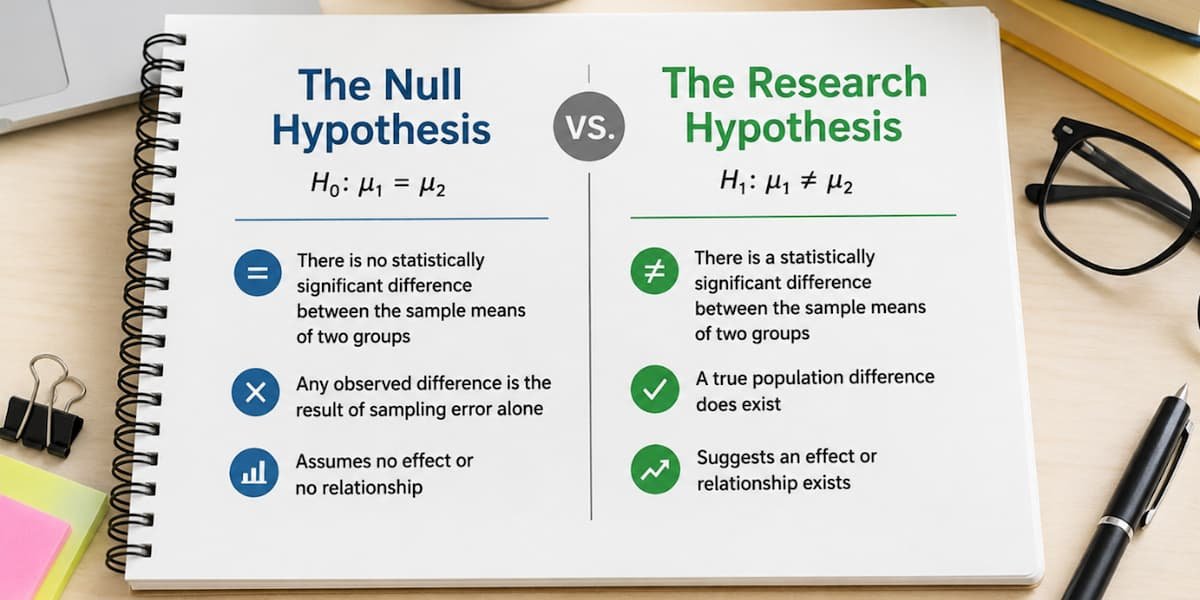
Many graduate students hear the terms null hypotheses and research hypotheses early in their dissertation journey, but they are not always sure what those terms really mean. In simple words, the research hypotheses explains what a student thinks may happen in the study. The null hypotheses says there is no relationship or difference between the groups or variables being studied. Researchers use statistics to test the null hypotheses and decide if the findings are strong enough to support the research idea.

This process helps students make conclusions based on evidence instead of personal opinions. In my experience, students understand statistics much better once they understand how hypotheses work

Quick Overview

Have you ever looked at a dissertation and wondered why hypotheses are such a big part of research?

A lot of students ask me this question.

Most research studies begin with a simple idea. A student notices a problem, asks a question, or becomes curious about something.

That curiosity turns into research.

But before collecting data, students need a clear direction. That is where hypotheses become useful.

They help students stay focused and understand what they are trying to test.

Many doctoral students feel nervous when they first start learning statistics. Some students worry they are “bad at math.” Others feel overwhelmed by research language.

I understand that feeling very well.

Through my book Simplifying Statistics for Graduate Students, I want to address this issue. I wanted students to stop feeling intimidated by statistics and research methods.

What Is a Research Hypotheses?

A research hypotheses is simply a prediction.

It explains what the researcher expects to happen in the study.

For example, a student may believe employees who receive training perform better at work. That belief becomes the research hypotheses.

The research hypotheses is usually written in a positive form because it predicts a relationship or difference.

This helps guide the study from beginning to end.

Without a clear hypotheses, students may feel lost during data collection and analysis.

Why Do Researchers Use a Null Hypotheses?

The null hypotheses is the opposite idea.

It states that no relationship or difference exists.

Researchers test the null hypotheses using statistics.

If the statistical results are strong enough, the null hypotheses is rejected.

If the results are weak, the researcher accepts the null or fails to reject it.

This process may sound technical, but it really helps researchers stay objective.

Instead of making assumptions, students use evidence from the data.

How Hypotheses Testing Works

Many students think hypotheses testing is very difficult.

Actually, the steps are fairly straightforward.

First, the researcher writes the null hypotheses.

Next, the researcher chooses a significance level such as .05 or .01.

A .05 level means there is a 95 percent confidence level.

A .01 level means there is a 99 percent confidence level and is considered more strict.

After choosing the significance level, the researcher runs the statistical test.

Then the results are examined carefully.

The goal is to decide whether the null hypotheses should be rejected or accepted.

What Does Statistical Significance Mean?

Students often hear the phrase “statistically significant,” but many are unsure what it means.

Statistical significance means the findings are unlikely to have happened by chance alone.

For example, a study may show that a training program improved employee performance.

If the statistical test is significant, the null hypotheses is rejected.

But students should remember something important.

A significant result does not always mean the finding is meaningful in real life.

I often encourage students to think beyond the numbers.

Do the results actually matter in a practical way?

That question is just as important as the statistical result itself.

Why Probability Levels Matter

Probability levels help researchers decide how careful they want to be when testing hypotheses.

Most dissertations use either:

  • .05 significance level
  • .01 significance level

Researchers also learn about errors in hypotheses testing.

A Type I error happens when the null hypotheses is rejected incorrectly.

A Type II error happens when a false null hypotheses is accepted.

At first, these concepts may sound confusing. But most students understand them better once they see real examples from research studies.

Understanding Directional and Nondirectional Hypotheses Types

Students should also learn about directional and nondirectional hypotheses types.

A directional hypotheses predicts the direction of the result.

For example, a student may predict that remote work increases employee satisfaction.

A nondirectional hypotheses only predicts that a relationship exists. It does not predict whether the result will increase or decrease.

This choice affects the type of statistical testing used in the study.

That is why students should think carefully before writing hypotheses.

Why Power Analysis Is Helpful

Power analysis helps students decide how many participants are needed for a study.

This step is important because a very small sample size may lead to weak results.

Many graduate students struggle with sample size decisions during dissertation research.

I often explain power analysis in simple language because students become less anxious once they understand why sample size matters.

Good planning early in the dissertation process can prevent many problems later.

Common Student Mistakes

I often see students make the same mistakes during hypotheses testing.

Some students write hypotheses that are too vague.

Others confuse the research hypotheses with the null hypotheses.

Some students choose the wrong statistical test or focus only on statistical significance while ignoring practical meaning.

I always remind students that simple and clear writing is usually better than overly complicated language.

Research should be understandable.

Closing Thoughts

Hypotheses testing is a major part of dissertation research. It helps students test ideas carefully and make decisions based on data instead of assumptions.

Many students feel stressed when they first learn statistics, but confidence grows when concepts are explained clearly and patiently.

Students do not need to feel alone during the dissertation process.

If you or your loved ones need support with dissertation statistics or research methods, consider working with me for personal guidance and dissertation help.

FAQs

1. What is a null hypotheses?

A null hypotheses states that no relationship or difference exists between variables in a study. Researchers test it with statistics to determine whether the findings are strong enough to reject it.

2. What is a research hypotheses?

A research hypotheses predicts that a relationship or difference exists in the study. It explains what the researcher expects to discover during the research process.

3. Why are hypotheses important in research?

Hypotheses help researchers stay focused and organized. They guide data collection, statistical testing, and interpretation of results throughout the research study.

4. What happens when the null hypotheses is rejected?

Rejecting the null hypotheses means the results suggest a meaningful relationship or difference exists between the variables being studied.

5. What is the difference between directional and nondirectional hypotheses?

A directional hypotheses predicts the direction of the result, while a nondirectional hypotheses only predicts that a relationship exists without predicting the direction.

6. Why do graduate students struggle with hypotheses testing?

Many students feel overwhelmed by statistics terms and research methods. Simple explanations, examples, and personal guidance usually help students understand the process more easily.

Author Bio

This blog is prepared by the team at Dissertation Statistics by Dr. Susan Carroll. The purpose is to help graduate students understand dissertation statistics and research methods in a clear and practical way.

Business Details

Dissertation Statistics by Dr. Susan Carroll
Website: Dissertation Statistics by Dr. Susan Carroll

Dr. Susan Carroll specializes in dissertation statistics and research methodology. She provides personal dissertation guidance for graduate students and is the author of Simplifying Statistics for Graduate Students.

Dissertation consultant

Dr. Susan Carroll is an expert in dissertation statistics and research methods.

I have provided one-on-one technical expertise and personalized coaching to numerous graduate students across the county.